Quality control in hair care contract production runs through four gates, and a batch that clears all four is the only thing standing between your label and a recall: incoming raw material inspection, formulation stability and compatibility testing, in-process control during batching and filling, and release testing before the pallet leaves the plant. If a supplier cannot show you records for all four — CoA per lot, a stability report for the exact formula, IPQC sheets for the batch, and a traceable batch number — you are not buying quality control, you are buying a promise.
A single bad batch of shampoo or a separated emulsion in a conditioner can trigger costly recalls, one-star reviews and lost retail listings. This guide breaks down the protocols top-tier cosmetic contract manufacturers actually run, and what a brand owner should ask for at each stage before signing.
1. Raw Material Inspection and Verification
Quality control begins long before the mixing tanks are turned on. Whether the brief is a sulfate-free shampoo, a deep-conditioning mask or a trending format such as a batana oil serum, the formula is only as good as the ingredients that enter the tank.
- Certificate of Analysis (CoA) Review: Every ingredient arriving at the facility must be accompanied by a CoA from the supplier, verifying its specifications against the approved standard.
- Microbiological Screening: Raw materials, especially process water and natural extracts, are tested for bacteria, yeast and mould before release to production.
- Physical and Chemical Profiling: Incoming lots are checked for pH, specific gravity, colour and odour so that a substituted or degraded lot is caught at the gate rather than in the finished batch.
2. Formulation Stability and Compatibility Testing
Before mass production begins, a reliable OEM/ODM manufacturer will run the formulation through stability and compatibility testing. This phase is what proves the product still looks, smells and performs like the approved sample after a year on a shelf in a warm market.
- Thermal Testing (Freeze-Thaw Cycles): Products are exposed to repeated temperature swings to confirm the emulsion does not separate, crystallise or change viscosity in transit.
- Photostability Testing: Exposure to UV light reveals discolouration or degradation — critical for clear or semi-transparent bottles where the customer can see the product.
- Packaging Compatibility: The bulk is stored in its final pack (PET bottle, airless pump, tube) for weeks to rule out leaching, stress cracking or pump failure.
3. In-Process Quality Control (IPQC)
During manufacturing, in-process quality control is what keeps an 8,000-litre batch faithful to the 100 ml lab sample the brand approved. It is also the stage where a factory’s discipline becomes visible: a plant that documents IPQC at fixed intervals behaves very differently from one that checks only at the end.
Top-tier facilities work to Good Manufacturing Practices (GMP) and ISO 22716. During production, QC technicians pull samples at defined stages and test for:
- pH Levels: Crucial for scalp comfort and cuticle smoothness, and the first number to drift when an acid or base is weighed short.
- Viscosity: Ensures the product flows through pumps and dispensers and feels right in the customer’s hand.
- Active Ingredient Homogeneity: Confirms actives such as keratin, caffeine or botanical extracts are evenly distributed through the whole batch, not concentrated in the first drums filled.
4. Post-Production and Microbiological Clearance
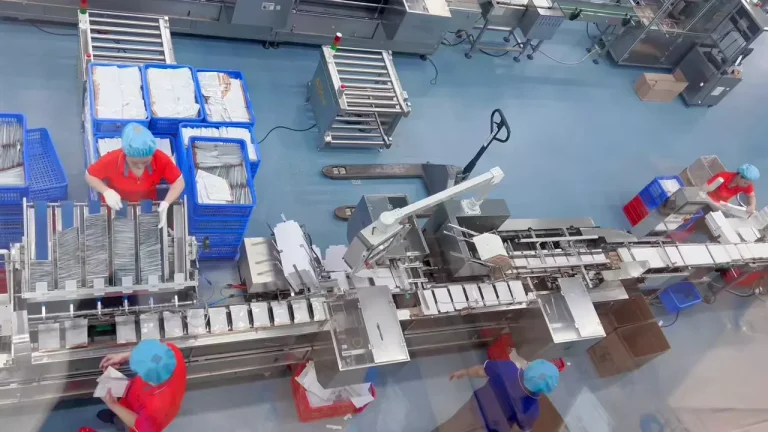
Once the product is blended and filled, it enters quarantine. Nothing ships to your distribution centre until the release tests clear.
- Seal and Leak Testing: Vacuum or pressure checks on seals, caps and pumps to prevent leaks in an ocean container.
- Final Microbial Testing: The finished, packaged product is tested once more to confirm no contamination entered during filling.
- Batch Tracing: A unique batch number links the finished unit to the raw material lots, the operators and the test data — the record that makes a targeted recall possible instead of a full one.
What QC Documentation Should You Request Before Signing?
Most brand owners ask for certificates and stop there. A certificate proves a system exists; it does not prove your batch was made inside it. Ask for the following, and ask for them against your formula rather than a generic company profile:
- Scope of certification. The GMPC or ISO 22716 certificate should name the site and the product categories covered. A certificate for a different plant or a different category is not evidence.
- Stability report for the approved formula. Accelerated and, ideally, real-time data, plus the packaging compatibility note for the pack you have chosen.
- Microbiological and challenge-test results. Especially for preservative-light or “free-from” claims, where the preservative system is doing more work than the label suggests.
- IPQC record from a comparable batch. A redacted batch record showing sample intervals, pH, viscosity and the corrective action taken when a value drifted.
- Retained sample policy. How long the factory keeps a retained sample of your batch, and where it is stored. This is what settles a dispute a year later.
- Non-conformance procedure. Who is notified, in what timeframe, and who pays for rework or replacement. Put it in the contract, not in an email.
If you are vetting the factory itself rather than a single batch, our due diligence guide to a GMP-certified hair care manufacturer in China walks through the same evidence in audit order, and the companion piece on an ISO-certified cosmetic factory in Guangzhou covers how to read the certificate set. Brands selling vegan or clean-beauty lines should also check the certification and supplier vetting requirements for vegan private label hair products, where documentation gaps are most often exposed.
How Much Does QC Add to Your Unit Cost and Lead Time?
Buyers usually ask this the other way round — what does skipping QC save? On a private label shampoo run, the four gates above sit inside the ex-works price rather than on top of it: CoA review and micro screening are part of incoming goods, stability work is charged once per formula as development cost, and IPQC plus release testing are absorbed into the fill cost. What actually moves your number is the three decisions below.
- Whether stability is charged as NRE or amortised. A freeze-thaw plus real-time programme on a new formula is a one-off development cost; on a repeat order it is already paid for. Ask which one you are being quoted.
- How many SKUs share one validation. One base validated across five fragrances is one stability programme; five different surfactant systems are five. This line item explains most of the gap between two apparently comparable Baiyun quotes.
- How long the batch sits in quarantine. Micro clearance and seal testing add days, not weeks, when the lab is in-house; a plant that outsources release testing adds transit time to every batch. Budget 7 to 14 days of quarantine into the first production schedule instead of discovering it at the container booking.
For the cost structure around those decisions, our breakdown of custom shampoo formulation cost separates development fees from unit price, and the five questions buyers ask before placing an order covers the specification points that decide how much QC scope you actually need.
Two scope details are worth checking against 2026 requirements rather than a 2023 certificate pack: ISO 22716:2007 is the version the GMPC audits are written against, and a US-bound line now needs the facility’s MoCRA registration on file alongside the EU Regulation 1223/2009 responsible-person documentation. A supplier whose evidence stops at “we are GMP certified” has answered neither question. Our 2026 shampoo OEM sourcing checklist lists the documents by destination market, and the GMP due diligence guide shows the order to request them in.
What a QC Failure Actually Costs Your Brand
Quality control is usually framed as a cost centre. It is more useful to price the failure it prevents, because that is the number a brand actually pays when the gate is skipped:
- Rework and replacement. A separated emulsion or a viscosity miss means the batch is remade or the order is replaced — usually at the brand’s cost when the specification was never written down.
- Freight on a dead shipment. Ocean freight, duties and warehousing are spent before the defect is discovered. None of it is recoverable.
- Listing risk. Marketplaces and retail buyers respond to a leak or a contamination complaint with delisting far faster than they respond to a good review.
- Review damage. The first hundred reviews set the product’s conversion rate for the rest of its life. A texture complaint in that window is expensive to undo.
The cheap way to buy this insurance is at the sampling stage: pay for the stability work and the challenge test on the front end, and specify the release criteria in the purchase contract. Our OEM and ODM service workflow lists the documents issued at each stage, so a brand can see what should exist before the deposit is paid.
Frequently Asked Questions (FAQ)
What is the standard quality control process in hair care manufacturing? Four stages: incoming raw material inspection against CoA, formulation stability and packaging compatibility testing, in-process quality control during batching and filling, and final microbiological plus seal-integrity testing before release.
Why is stability testing important for hair care products? It proves the formula will not separate, discolour or lose efficacy across its shelf life, and that it survives the temperature swings of an ocean container and a warm warehouse.
What certifications should a reliable hair care contract manufacturer have? ISO 22716 and a documented GMP programme at minimum, with the certificate scope matching the site and the product category. Depending on the destination market, additional registration or labelling support may be required.
How does a factory ensure consistency across production batches? Automated batching, written SOPs, IPQC checks at fixed intervals, and comparison of every batch against a retained master standard for pH, viscosity and specific gravity.
Conclusion: Partnering with a Factory That Prioritizes Quality
Effective quality control in hair care contract production is a multi-step system that depends on equipment, experienced chemists and a genuine commitment to documented standards. When you evaluate B2B manufacturing partners, the QC laboratory and its records should be the first thing you inspect — before price, before packaging, before the factory tour photos.
Partnering with a factory that treats quality assurance as a strict science lowers return rates, protects your listings and guarantees that customers receive exactly what the label promises. To review the QC documentation set against a specific formulation, send us your product brief and target market — we will reply with the stability and release protocol we would run for that formula, plus a quotation against your volume.
Next step: send us the formula brief, the destination market and the volume you have in mind, and we will return the QC protocol we would run for that formula — sample intervals, release criteria and the quarantine window — together with a quotation. If you already have a supplier, send their certificate pack and we will tell you which of the six documents above is missing. Start with the brief and quotation request, or review our OEM and ODM service workflow to see what is issued at each stage.
For the full picture on this category, start with Shampoo OEM Manufacturer China: 2026 Sourcing Checklist.
Adjacent briefs worth reading together: Finding a Premium Hair Care Contract Manufacturer: The Key to Building a Successful Hair C, Finding a Reliable Hair & Body Care Contract Manufacturer: From Formulation R&D to, How to Choose the Best OEM Shampoo Factory for Your Hair Care Brand.
If you are comparing what a factory already produces, review our existing shampoo and scalp care formulations.