In today’s fiercely competitive personal care market, whether you are a startup brand or an established enterprise looking to expand your product lines, the strength of your backend supply chain often determines how far your brand can go. A professional and efficient hair and body care contract manufacturer is not merely a production workshop; it is the core incubator that turns a brand concept into a market-ready bestseller.
This article provides an in-depth analysis of the core dimensions you need to consider when selecting a hair and body care manufacturer, helping you accurately match with a premium supply chain and seize market opportunities.
Why is a Premium Contract Manufacturer a Brand’s Core Competitiveness?
As consumer demands for shampoos, conditioners, and body washes become increasingly segmented (e.g., silicone-free, scalp microbiome-friendly, amino acid nourishment), the traditional “low-price, high-volume” model can no longer satisfy the market. By partnering with a top-tier contract manufacturer, brands gain the following significant advantages:
- Reduce Trial Costs and Heavy Asset Investments: Brands do not need to build their own factories, purchase expensive filling equipment, or assemble massive production teams. This allows funds to be concentrated on brand marketing and channel expansion.
- Share Cutting-Edge R&D Achievements: Highly capable factories possess mature formulation libraries and senior R&D engineers, enabling them to respond quickly to popular market trends such as “anti-hair loss,” “anti-dandruff,” and “premium fragrance.”
- Ensure Quality and Compliance: Facing strict cosmetic regulations across different countries, a professional manufacturer’s quality control system ensures that products clear customs smoothly and launch safely.
In-Depth Evaluation: How to Screen a Reliable Contract Manufacturer?
When looking for a B2B partner, you cannot simply stop at comparing quotation sheets. It is recommended to evaluate manufacturers deeply across the following four dimensions:
1. Hardware Facilities & Quality Certifications (GMPC / ISO)
This is the stepping stone for entering domestic and international markets. A first-class hair and body care factory must have a strict production environment and international certifications:
- GMPC Certification (Good Manufacturing Practice of Cosmetic Products) and ISO 22716 Quality Management System Certification.
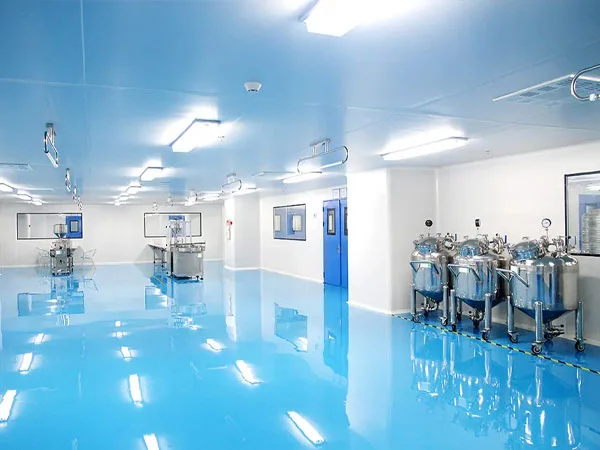
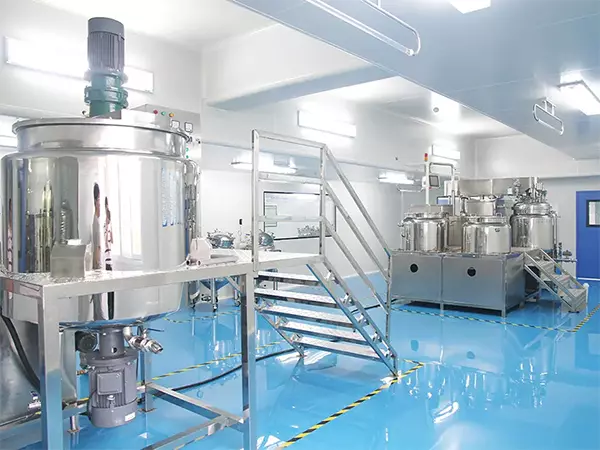
- A 100,000-class (or higher) dust-free cleanroom to ensure hygiene standards during the filling process of personal care products.
- Advanced EDI (Electrodeionization) reverse osmosis deionized water equipment (water quality is the soul of any liquid wash product).
2. R&D Strength & Formulation Customization (OEM vs. ODM)
Understand whether the factory is only capable of basic OEM (Original Equipment Manufacturer) or if it possesses strong ODM (Original Design Manufacturer) capabilities.
| Cooperation Model | Target Audience | Core Advantages | Factory Support Provided |
| OEM | Brands with mature formulas and clear product plans. | Rapid production, highly controllable costs. | Raw material procurement, scalable production, quality testing. |
| ODM | Clients with brand concepts but lacking R&D capabilities. | Creates differentiated products, worry-free process. | Market analysis, formula R&D, packaging design, mass production. |
3. Flexible Production & Capacity Planning
The product life cycle and promotional peaks (such as major holiday sales) require factories to have extremely high capacity elasticity.
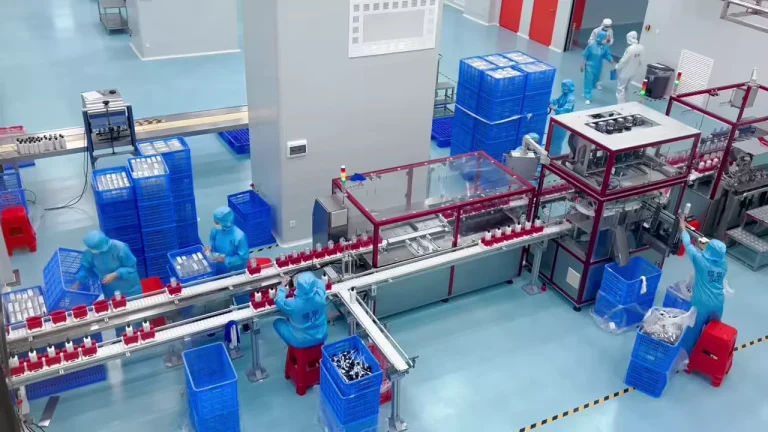
- Automated Filling Lines: Check if the factory has multiple fully automated/semi-automated filling lines to handle different viscosities and packaging forms for shampoos, hair masks, and lotions.
- MOQ (Minimum Order Quantity) Support: An excellent manufacturer can offer relatively flexible MOQs to support a brand’s early-stage market testing, while also possessing the capability to rapidly deliver million-unit mega-orders.
4. Full-Chain Supply Chain Integration
Beyond producing the bulk formula, packaging selection is crucial to the perceived value of a personal care product. Factories with a high-quality packaging supplier network that can offer one-stop sourcing advice—from pump heads and bottles to outer boxes—can significantly shorten your time-to-market.
Efficient Launch: Standard Workflow for Contract Manufacturing
Coordinating with a manufacturer is a systematic project. Familiarizing yourself with the following workflow will help improve communication efficiency:
- In-Depth Requirement Communication: Define the product positioning, target audience, core efficacy (e.g., keratin repair shampoo for damaged hair), expected cost, and packaging format.
- Sampling & Formula Confirmation: Engineers formulate the bulk product based on requirements. The brand needs to conduct multiple rounds of testing on skin feel, scent, foaming ability, and efficacy until the formula is finalized.
- Packaging Testing & Compatibility Experiments: Ensure the formula does not chemically react with the selected packaging (e.g., PET/PE bottles, vacuum pumps), and conduct high/low-temperature and drop tests.
- Contract Signing & Regulatory Filing: Finalize production details. The manufacturer assists in completing relevant product filings, registrations, and compliance inspections.
- Mass Production & Quality Control: Raw material inspection upon warehousing, emulsification and resting, filling production, and finished product sampling to ensure bulk goods match the sample quality perfectly.
- Delivery & After-Sales Tracking: On-time logistics delivery and provision of subsequent formula upgrade recommendations.
Conclusion
Finding the right hair and body care contract manufacturer is equivalent to building a moat for your brand. During your evaluation, be sure to conduct on-site factory audits, communicate face-to-face with R&D and production heads, and pay close attention to details and compliance. Only with a solid foundation on the supply chain side can the brand side ride the waves in the fierce global personal care market, achieving continuous growth in B2B inquiries and overall sales.
For the full picture on this category, start with Shampoo OEM Manufacturer China: 2026 Sourcing Checklist.
Adjacent briefs worth reading together: Finding a Reliable Private Label Shampoo Manufacturer: Build Your Hair Care Brand from Scr, Ultimate Guide to Hair & Body Care Manufacturers: How to Choose a Reliable OEM/ODM Par, How to customize your own shampoo brand through OEM.
If you are comparing what a factory already produces, review our existing shampoo and scalp care formulations.