What a Custom Shampoo Manufacturer Actually Builds For You
A custom shampoo manufacturer develops a formula around a written brief: surfactant system, viscosity target, actives, fragrance, preservative and pack. It is not the same as filling a stock base into your own bottle. The difference shows up in your development fee, your timeline, and how hard the finished product is to copy once it starts selling.
Three sourcing models get quoted as if they were interchangeable. Private label starts from a base the factory already produces, and you choose fragrance, colour and packaging. Custom formulation changes the surfactant system, the active level and the on-pack claims. Full ODM adds pack development and artwork to the formulation work.
One question separates them at quotation stage: ask how many other brands in your target market already use the base you were offered. A factory that can answer is selling private label, which is perfectly workable as long as the price reflects it. If nobody will answer, you are usually paying a custom price for a catalogue formula.
The Six-Week Calendar, Stage by Stage
Six weeks is a realistic brief-to-first-batch window for a custom shampoo manufacturer working from a complete brief and an existing bottle. It compresses to about four weeks if you accept the factory’s stock base, and stretches past ten when you specify new tooling or an unusual active.
| Stage | Working days | What you receive |
|---|---|---|
| Brief review and costed quote | 3–5 | Formula outline, pack options, quote with fill volume stated |
| First lab sample | 7–10 | 5 L pilot batch, hand-filled into 2–3 bottles |
| Sample revision (per round) | 7–10 | Adjusted viscosity, fragrance or active level |
| Artwork and dieline proof | 5–7 | Print-ready label file, barcode and batch code placement |
| Bulk production | 10–15 | 5,000–20,000 units on a semi-automatic line |
| QC release and batch record | 2–3 | COA, batch number, retain sample |
| Export documents | 3–5 | Invoice, packing list, SDS, certificate of origin |
The stage that slips is rarely the lab. It is artwork and label printing, which sit on the critical path for a first order and are almost entirely within your control. Send final copy in week one and you can run proofing in parallel with sampling, which saves five to seven days without touching the formula.
The Brief That Determines Your Timeline
Vague briefs produce slow development. A custom shampoo manufacturer can start work the same week when the brief answers nine points:
- Positioning — salon professional, mass retail, pharmacy or DTC subscription.
- Target market — the compliance route (EU, US, GCC, ASEAN) changes which preservatives and actives are permitted.
- Surfactant direction — sulfate-based, sulfate-free or a hybrid. This one choice drives both cost and consumer feel.
- Viscosity target — typically 3,000–8,000 cP for a pourable shampoo, measured on a Brookfield RV viscometer, spindle 4 at 20 rpm, 25 °C.
- pH window — 5.0–5.5 for scalp comfort and preservative performance.
- Active system — the ingredient your claim rests on, plus the concentration you can legally support.
- Fragrance — your own oil, a purchased compound, or a reference from the factory library.
- Pack — bottle material, neck finish, closure type and fill volume.
- Volume and launch date — the quantity you can commit to in the first run, not the volume you hope to reach later.
Every point you leave blank turns into an extra sample round. Each round costs seven to ten working days, so three missing answers is roughly a month.
Surfactant Systems, Actives and What They Cost You
The surfactant pair is the largest cost driver in a shampoo formula, and it also decides what your label can claim.
- Primary anionic surfactants — SLES and alpha-olefin sulfonate give dense, fast foam at low cost, but they limit a mildness or sulfate-free story.
- Secondary amphoteric surfactants — cocamidopropyl betaine is close to universal as a foam booster and mildness agent. It also interacts with some cationic conditioning systems, which is why the preservative efficacy test matters when you change it.
- Sulfate-free systems — sodium cocoyl isethionate, sodium lauroyl methyl isethionate, coco-glucoside and sodium cocoyl glutamate lather differently. Expect a creamier, lower-volume foam, and expect thickeners such as PEG-150 distearate to replace part of the salt curve.
- Actives — piroctone olamine, salicylic acid, caffeine, panthenol, hydrolyzed keratin and biotin each have practical use limits, and several markets cap concentrations in rinse-off products. Confirm the permitted level for every destination market before the lab starts.
Thickening deserves its own conversation. Sodium chloride is the cheapest way to raise viscosity, but the salt curve is not linear: past a peak, adding more salt thins the product. A factory that formulates by titration rather than by fixed recipe will tell you where that peak sits for your specific surfactant blend, and that single number prevents a failed first batch.
Packaging, Fill Lines and MOQ
Pack choice moves your minimum order more than your formula does.
| Pack format | Typical fill range | Notes |
|---|---|---|
| PET or HDPE bottle, disc-top or flip-top | 250–1000 ml | Lowest tooling risk; standard 24/410 or 28/410 neck finish |
| Pump bottle | 300–500 ml | Preferred for premium and salon positioning |
| Tube | 100–250 ml | Suits thick masks and treatment conditioners |
| Sachet | 8–12 ml | High-volume sampling; needs a dedicated filling line |
| Pouch with spout | 500–1000 ml | Light to ship, harder to merchandise on shelf |
Stock bottles with a standard neck finish avoid mould cost entirely. Custom moulds add weeks and a fixed tooling charge that only pays back at volume, and the break-even point depends on your annual forecast rather than your first order.
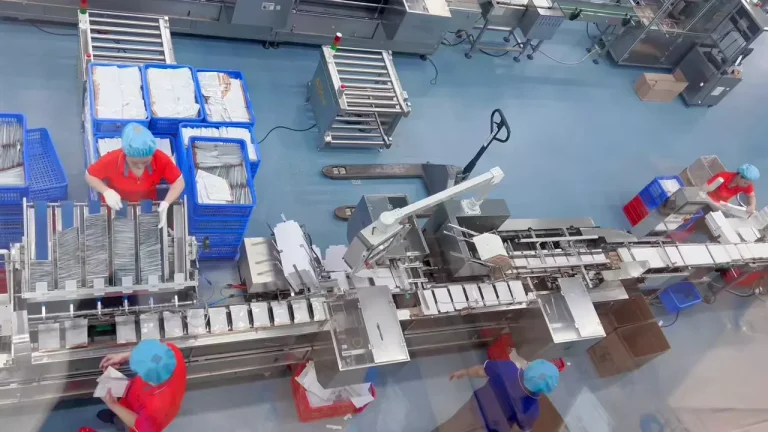
MOQ on this production line starts at 5,000 pcs per SKU. At that volume a semi-automatic line holds fill accuracy of roughly ±1%, which is adequate for consumer retail. Above 30,000 units production normally moves to a fully automatic line with in-line checkweighing, and unit cost responds accordingly. If your first run is closer to 5,000, plan to launch one or two SKUs properly instead of four half-loaded ones.
Compliance Documents to Collect Before the First Batch
Ask for the documentation pack while you are still sampling, not after the purchase order. Late document gaps are the most common cause of delayed first shipments.
- GMPC / ISO 22716 certificate for the manufacturing site, with a validity date and the product scope covered.
- Batch COA issued against your production batch, not against a reference batch from last year.
- Safety Data Sheet in GHS format, in English, for customs and for your own regulatory file.
- Preservative efficacy test report for the finished formula.
- Stability data — accelerated storage at elevated temperature, plus freeze-thaw cycling.
- Microbiological and heavy metal test reports within the limits set by your destination market.
- Free sale certificate where the importing authority requires one.
For the EU you will additionally need a Cosmetic Product Safety Report and a CPNP notification filed by a responsible person established in the EU. For the US, facility registration and product listing obligations under MoCRA now apply to manufacturers and brand owners. A factory cannot complete either on your behalf without your brand details, but a competent partner will state clearly what they supply and what you must file.
How to Shortlist a Custom Shampoo Manufacturer
Five checks separate a formulator from a reseller. Run them in this order, before you discuss price.
- Ask for raw material purchase records for the two most expensive ingredients in your brief. A formulator buys from a distributor and can show it. A trader will deflect.
- Request a formulation change mid-sampling — swap a surfactant or raise an active level. A real lab returns a revised sample in under two weeks.
- Visit or video-audit the mixing and filling hall. Look for separate emulsifying vessels, a QC bench with a viscometer and pH meter, and retain samples dated by batch.
- Cross-check the QC routine — pH, viscosity, specific gravity and microbial testing per batch. Our OEM service scope shows how these stages are structured on a production line.
- Confirm the documentation turnaround you need, in writing, with the delivery method stated.
Our formulation library lists the base systems already in production, which is the fastest way to judge whether your concept sits close to an existing platform or needs development from scratch.
Custom development or a stock base?
| Model | Development time | Investment | Fits |
|---|---|---|---|
| Private label on a stock base | 3–4 weeks | Sample and MOQ only | First SKU, marketplace launch, speed over differentiation |
| Custom formulation | 6–10 weeks | Development fee plus MOQ | Positioning you intend to defend, or claims a stock base cannot support |
| Custom formulation with new packaging | 10–16 weeks | Development fee, tooling, MOQ | Established brands with forecast volume |
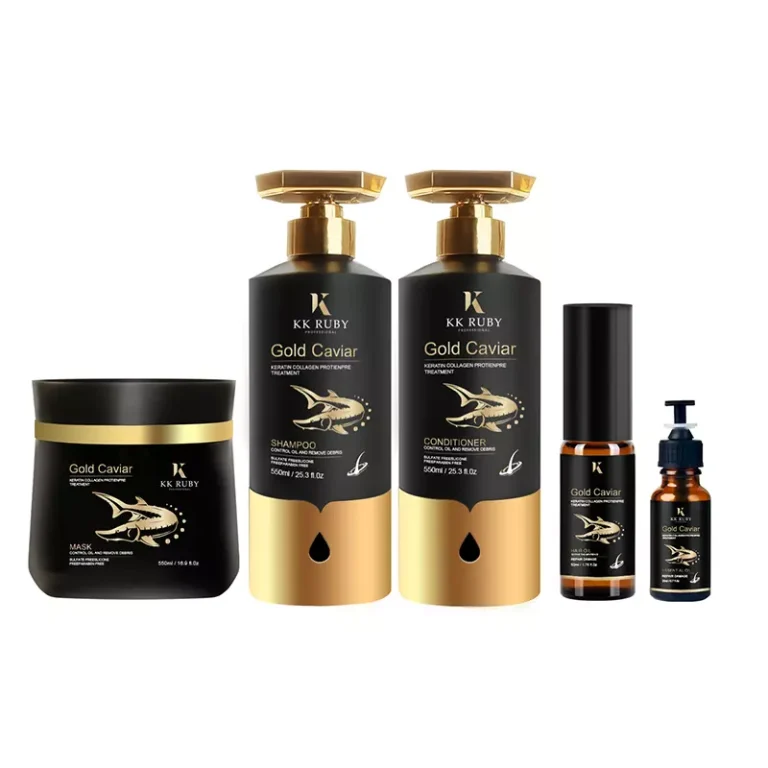
Our stocked private label hair care sets show what a finished specification looks like in practice, and comparing the pack and formula detail across the product range is often faster than a first sample round — it tells you which parts of your concept already exist. A custom shampoo manufacturer quoting a stock base is not doing anything wrong. You just want to know which of the three models you are buying.
Two articles explain most of the line items on a first quote: how minimum order quantities are actually set and what a formulation change costs. For unit economics across a full SKU set, see the per-unit cost breakdown. If your concept includes a conditioner or mask alongside the shampoo, the same development logic applies to companion products.
FAQ and Next Steps
What is the minimum order for custom shampoo?
5,000 pcs per SKU is the working floor for a liquid shampoo on a semi-automatic line. Lower volumes are possible when you accept a stock bottle, a stock formula and a single fragrance. The trade-off is differentiation, not quality.
How many sample rounds should I budget for?
Two. The first corrects viscosity and fragrance, the second confirms the fix. If a custom shampoo manufacturer needs four rounds, the brief was incomplete or the lab is working from a template.
Can I use my own fragrance oil?
Yes, provided it is IFRA-compliant for the product category. Send the oil and its documentation with the brief, because the preservative system may need adjustment to accommodate it.
Do I need a different formula for each market?
Sometimes. Preservative lists, active concentration limits and labelling rules differ between the EU, US, GCC and ASEAN. One base can often serve several markets with a minor adjustment, but that decision has to be taken at brief stage, not at label printing.
Who owns the formula?
Settle it in the development agreement. Exclusivity is usually tied to a minimum annual volume or to a development fee. Get the ownership scope, the duration and the territories in writing before the first batch is produced.
The fastest way to shorten development is to send a complete brief: positioning, target market, surfactant direction, viscosity target, active system, pack and a realistic first-run volume. With those answers, a custom shampoo manufacturer can return a costed quote in three to five working days and a first sample inside two weeks.
Send your brief through our request form and we will come back with MOQ, lead time and the documentation list for your destination market within one business day. If you would rather settle the compliance route first, talk to our formulator before you commit to a specification.
For the full picture on this category, start with Shampoo OEM Manufacturer China: 2026 Sourcing Checklist.
Adjacent briefs worth reading together: Beyond the Shelf: The Power of Custom Shampoo Processing, Custom Hair Care Formulation: When and How to Invest in Bespoke Products, How to Choose the Best OEM Shampoo Factory for Your Hair Care Brand.