Hair Growth Shampoo OEM: What the Category Actually Requires
A hair growth shampoo OEM project looks like an ordinary shampoo brief until you reach the claim. The formula has to clean and condition like a mainstream shampoo and also carry actives that a marketing team wants to talk about in numbers. That combination is what makes the category harder than a moisturising line, and it is the reason so many launches stall somewhere between the pilot batch and the first container.
Most buyers arrive with a reference product and a sentence they want on the front panel. What they usually lack is a test plan. In a standard shampoo project the buyer approves texture and scent, then moves to artwork. In a growth-positioned project the sample is the easy part; the hard part is deciding which claims the data can actually carry, and which sentences have to be rewritten before the label goes to print.
Two structural facts shape everything below. In the United States, a shampoo that claims to regrow hair or restore hair growth moves out of the cosmetic category into the drug category, where the approved over-the-counter regrowth ingredient list is very short. In the European Union, cosmetic claims must be supported by adequate and verifiable evidence under the Common Criteria. Both rules push in the same direction: the winning formula is not the strongest formula, it is the one whose test file matches its label.
Actives That Survive Scale-Up — and the Ones That Do Not
The actives below are the ones that appear most often in briefs we receive. What matters at the factory level is not only whether an active works, but whether it survives heating, pH drift, preservation and two years on a shelf.
- Caffeine — used at roughly 0.5–2%. Water-soluble, tolerant of processing below 60 °C, and easy to assay by HPLC. Contact time in a rinse-off shampoo is short, so buyers usually pair it with a leave-on serum instead of relying on the wash alone.
- Piroctone olamine — the practical cosmetic route when a brief asks for an anti-fungal scalp function. Ketoconazole at 1% and 2% is a drug active in most markets, with its own labelling and facility requirements; treat that as a separate project rather than a variant of a cosmetic line.
- Zinc pyrithione (ZPT) — no longer permitted in cosmetic products in the EU since March 2022. If your European retailer references ZPT on a competitor label, plan a reformulation for that market rather than copying the reference.
- Rosemary (Rosmarinus officinalis) extract and oil — typically 0.5–2%. The oil has a genuine solubility problem in a surfactant base and needs a solubiliser, which affects clarity, foam density and cost.
- Peptides — acetyl tetrapeptide-3 and copper peptides are usually dosed as 1–5% of a diluted solution. They are the most sensitive actives in the category to pH drift and preservative incompatibility, and the ones most likely to fail a challenge test when a botanical extract is added later.
- Panthenol, niacinamide, glycerin — inexpensive, stable and easy to substantiate for conditioning and moisture claims. Build the label story here if you want a claim you can defend with low-cost instrumental data.
- Biotin — frequently added to support a label narrative. Topically applied biotin has weak published support for hair growth at shampoo contact times, so it should not carry a performance claim on its own.
- Herbal extracts (platycladus orientalis, ginseng, saw palmetto) — the standard route for Asia-focused lines. Buyers should request a marker-compound specification and a COA per lot; extract quality varies far more between suppliers than the INCI name suggests.
Eight Tests to Run Before You Commit to a Production Run
This is the part most briefs skip. Each test below exists because a formula that passes without it will fail somewhere else — usually after the cartons are printed.
- Accelerated stability. Three months at 45 °C, three freeze–thaw cycles between −10 °C and 45 °C, and a 12-week ambient control. Record viscosity, pH, colour, odour and an assay of the lead active at t = 0, 4, 8 and 12 weeks. A formula that loses more than about 10% of its lead active at 45 °C will not hold its claim through a two-year shelf life.
- Preservative efficacy. Run a challenge test to ISO 11930 or the equivalent CTFA method, on your formula with your preservative system — not on the plain base the factory keeps for generic sampling. Botanical extracts carry their own microbial load, and 1% of a rosemary or platycladus extract can break a system that passed in an unscented base.
- pH drift and surfactant compatibility. Measure pH at t = 0 and again at 12 weeks. Most actives in this category sit in a window between pH 4.5 and 6.0. A mild surfactant base that drifts above 6.5 will quietly deactivate peptides and reduce the active fraction of the preservative system.
- Packaging interaction. Fill the final container, not a glass beaker. PET and recycled HDPE can interact with essential-oil fractions; check for panel deformation, pump or disc-top torque loss, and weight loss over three months. If a foamer is planned, test foam collapse rate early — growth-positioned formulas often foam poorly once solubiliser load goes up.
- Panel efficacy. 60–80 subjects, 8–12 weeks, with a wash-out baseline or a control, and at least three instrumented endpoints: hair count from standardised macro photography or a phototrichogram, shedding counts from a 60-second combing test, and combing force for breakage. Self-assessment questionnaires are useful for marketing, but they are not efficacy data on their own.
- Instrumental breakage and combing. Wet and dry combing force, tensile strength of treated versus untreated hair swatches, and if the word “repair” appears anywhere in the copy, cuticle integrity by scanning electron microscopy. Most “stronger hair” claims are won or lost here, well before the panel study reports.
- Safety and microbiology. Microbial limits, heavy metals against your market’s limits, and a sensitisation review of the fragrance and essential-oil fraction. For a scalp-care line, patch-test the finished formula, not the isolated raw materials.
- Three-batch fill-line trial. Three consecutive production batches with weight control, capping torque, leak testing and a retained sample from each batch. A formula that fills cleanly from a pilot tank can behave differently on a high-speed line when viscosity moves by 1,500 cP between batches.
| Test | Document you should receive | Typical sign-off |
|---|---|---|
| Accelerated stability | Stability report with assay table at 4/8/12 weeks | Formulation chemist |
| Preservative efficacy | Challenge test report to ISO 11930 | Microbiology lab |
| pH / viscosity drift | Specification sheet with in-process limits | QC |
| Packaging interaction | Compatibility memo plus retained filled units | Packaging engineer |
| Panel efficacy | Study protocol, raw data, statistical summary | Third-party lab |
| Instrumental breakage | Combing-force and tensile report | Third-party lab |
| Safety / microbiology | COA, heavy-metal report, MSDS | QC and regulatory |
| Fill-line trial | Batch records plus retention list | Production manager |
Specifications, Packaging and Fill-Line Realities
A hair growth shampoo OEM run uses the same equipment as any other shampoo line, so the constraints are familiar. What changes is how narrow the tolerance becomes once you add actives and a solubiliser.
| Parameter | Typical range for a growth-positioned shampoo |
|---|---|
| Fill volume | 250 ml / 300 ml / 400 ml / 500 ml; 30–50 ml sachets for sampling |
| Surfactant system | SLES and CAPB, or sulfate-free (isethionate, glucoside, glutamate) |
| Active load | 0.5–2% total water-soluble actives; 1–5% of a peptide solution |
| Viscosity | 3,000–9,000 cP at 25 °C, depending on pump or disc-top |
| pH | 4.5–6.0 |
| Bottle | PET, HDPE or PCR-HDPE, 24/410 or 28/410 neck |
| Closure | Disc-top, flip-top, lotion pump, foamer |
| Decoration | Pressure-sensitive label or shrink sleeve, 4–6 colours |
| MOQ | 5,000 pcs per SKU (site standard) |
| Lead time | 25–35 days after artwork approval on an existing base |
Two practical notes. Heat-sensitive actives should run on a cold process, which means a longer mixing time and a tighter viscosity spec; ask for the process sequence in writing rather than assuming the pilot and production routes match. And pilot batches are typically 50–100 kg, which is enough for a stability programme and a panel study but not enough for a retail launch — plan the production run only after the challenge test and the 12-week assay data are back.
If you are still choosing a base, review the existing shampoo and scalp care formulations before commissioning something new. Adapting a proven base is almost always faster than starting from an empty brief.
Claims and Label Wording: What You Can Legally Say
Once the test file exists, the label becomes a mapping exercise. Each sentence on the front panel should trace back to a specific result.
- Comfortable cosmetic claim space: reduces breakage, helps reduce shedding caused by breakage, strengthens hair, conditions the scalp, supports a balanced scalp environment, nourishes dry ends.
- Drug territory in the US: grows hair, regrows hair, stops hair loss, treats alopecia, or any measured increase in hair count. These need a drug registration, not a cosmetic notification.
- Market-by-market wording: a substantiated cosmetic claim is achievable in the EU and in many other markets if the Common Criteria are met, but the same sentence may need rewriting for the US. Get the wording reviewed per market before artwork is released, not after.
- Numbers need conditions: if a panel study measured a difference, quote it with the duration, subject count and endpoint — “12-week instrumental study, 62 subjects, combing-force endpoint” — and keep the raw data in the claim substantiation file.
For the wider scalp and anti-dandruff claim landscape, our guide to anti-dandruff shampoo actives and label claims covers the same mapping process for a neighbouring category.
How to Shortlist a Hair Growth Shampoo OEM Partner
Six questions separate factories from trading offices, and all six are answerable in one call.
- What are your tank sizes and filling capacity? A plant with a pilot tank in the low hundreds of litres and a production tank in the low thousands can scale with you across several order cycles. A supplier who only quotes finished goods cannot.
- Do you run the stability chamber in house? If it is outsourced, add four to six weeks and expect a harder sample chain to audit.
- Can I see a redacted batch record from a scalp or anti-dandruff line? This is a better signal than a certificate, because it shows the documentation habit.
- How do you handle claim review? A manufacturer who pushes back on your label wording before artwork is protecting your launch. A supplier who approves everything is not reviewing anything.
- Is the pilot formula the same code as the production formula? Often it is not, and the difference only surfaces at the challenge test.
- What is included in a sample batch? Ask for the specification sheet, the MSDS, the COA and the retention policy, so the sample already looks like a production order.
Our OEM and ODM service workflow sets out how briefs, pilot runs and claim review are sequenced, and the private label hair care guide covers the commercial checks — ownership of the formula, exclusivity and tooling — that sit alongside the technical ones.
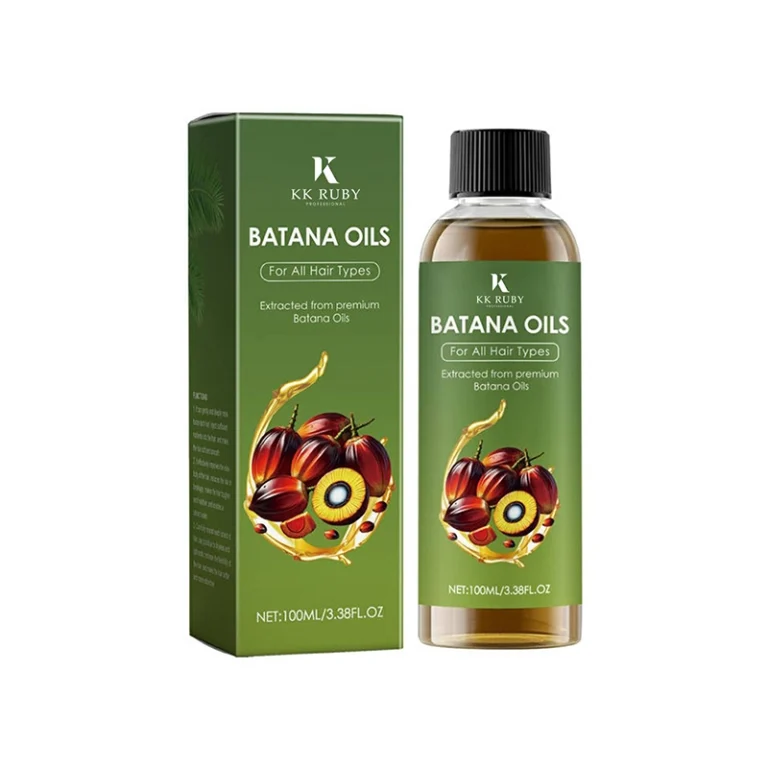
Two cluster reads are worth an hour before you shortlist. The anti hair loss shampoo OEM overview frames the category at a commercial level, and the scalp treatment private label guide covers the adjacent treatment segment. If your positioning leans on a botanical story, platycladus orientalis sourcing for herbal anti-hair-loss lines explains how marker-compound specifications are written. Buyers building an oil-led range instead of a shampoo can start from the batana oil hair growth sourcing guide and cross-check it against the private label hair care product range before deciding which format leads the launch.
FAQ: Hair Growth Shampoo OEM Questions Buyers Ask First
How long does a hair growth shampoo OEM project take from brief to first shipment?
A repeat base with your fragrance and packaging runs about 6–8 weeks from artwork approval. A new formula with an active that needs an assay method and a challenge test adds 8–12 weeks of validation before the fill line is scheduled. Budget the validation first; it is the step that cannot be compressed.
Can we reuse a competitor’s label claims?
No. Claims must be substantiated for your own formula. Two shampoos carrying the same active name at different concentrations, pH values and contact times will not produce the same panel result, and a substantiation file that points at another brand’s study will not survive retailer review.
What is actually inside the sample I approve?
Ask. A bench sample may be mixed at 2 litres with hand-weighed actives; a production-representative sample comes from the pilot tank using the same process sequence, the same preservative system and the same filling method. Buyers who approve a bench sample usually pay for it at the challenge-test stage, when the formula has to be changed.
Do we need GMPC or ISO 22716 for a growth-positioned line?
Both cover process, hygiene and documentation — not efficacy. They tell you the factory can reproduce a formula consistently, which you need for retailer onboarding. They do not tell you the formula performs, which is what the panel study and the instrumental data are for.
What is the smallest order that still makes commercial sense?
On this site the standard entry point is 5,000 pcs per SKU, which lets a brand launch two or three sizes without carrying a full container of one bottle. Below that, tooling and artwork setup costs start to dominate the unit cost. See our request form if you want a volume-to-cost curve for a specific fill size.
Next Step: Samples, a Quote and a Test Plan
Send us your hair growth shampoo OEM brief — target market, fill volume, packaging format and the claim you want on the front panel. We will come back with a base recommendation, a MOQ and lead time, and a written test plan covering stability, preservative challenge and the efficacy endpoints your claim will need. If the wording cannot be supported yet, we will tell you before you spend money on artwork. Request a sample batch and a costed quote, or talk to our formulator about which actives survive your process route.
Adjacent briefs worth reading together: A Comprehensive Guide: How to Choose a High-Quality Anti Hair Loss Shampoo OEM Manufacture, Beyond the Bottle: The Science and Manufacturing of Wild Growth Oil, Hair Growth Oil Contract Manufacturing: A Complete Guide for Procurement Decision-Makers.