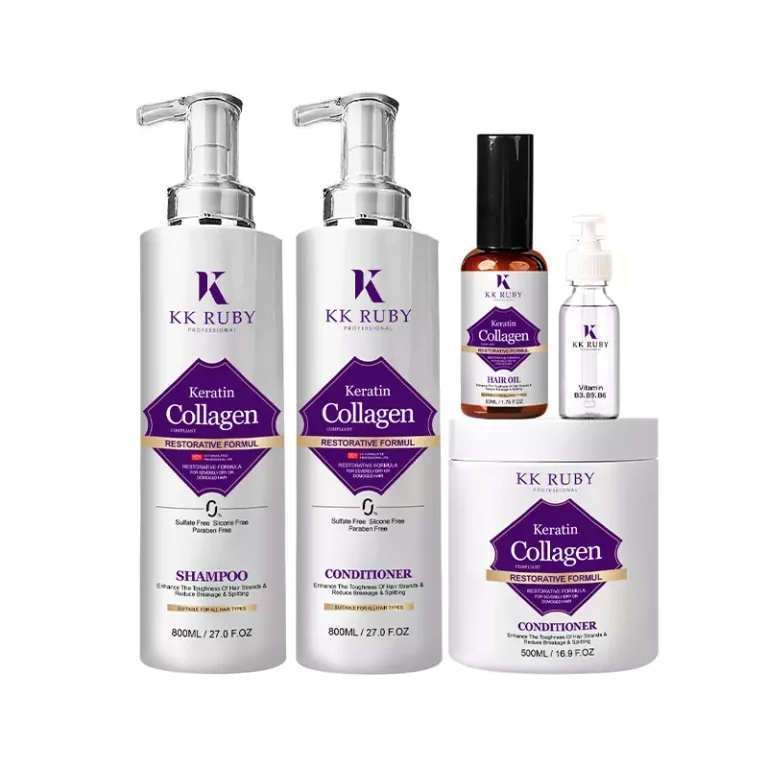
Anti-dandruff shampoo is one of the few hair care categories where the active ingredient, rather than the fragrance, drives the repeat purchase. Buyers building a medicated or dandruff range for pharmacy chains, dermatology clinics, or e-commerce increasingly look for a ketoconazole shampoo manufacturer private label partner that can document a controlled formula instead of quoting only a price per bottle.
This guide is written for procurement and category managers. It explains how ketoconazole is regulated across markets, how a factory should build and test the formula, the commercial terms to expect, and the questions that separate a real manufacturer from a trading company.
What Ketoconazole Shampoo Is, and Why the Regulatory Pathway Comes First
Ketoconazole is an imidazole antifungal. It inhibits ergosterol synthesis in the fungal cell membrane, which is why it is effective against Malassezia, the yeast associated with dandruff and seborrheic dermatitis. In a shampoo base it is formulated as a suspended solid, because the active is practically insoluble in water.
Before formula work starts, a buyer has to settle the classification. In the United States, ketoconazole at 1 percent is handled through the OTC drug pathway and at 2 percent through prescription status. In the European Union the substance is not permitted in cosmetic products at all. The classification decides labelling, claims, testing, and registration timelines, so a supplier who cannot state which pathway it supports is not ready to quote. A serious ketoconazole shampoo manufacturer private label programme begins with that answer, not with the unit price.
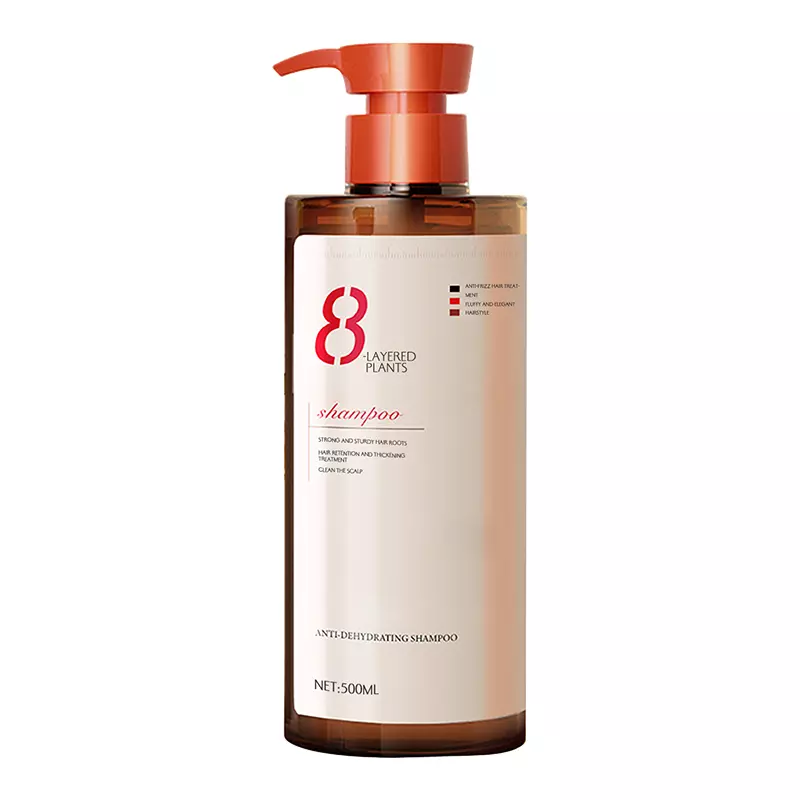
Formulation Framework for an Anti-Dandruff Shampoo
Four decisions determine performance and shelf life.
Active level and assay control. The label declares a percentage, and the finished product must match it batch after batch. Because the active is suspended rather than dissolved, the factory needs a validated assay method, normally high-performance liquid chromatography, plus a mixing procedure that guarantees a uniform dispersion.
Surfactant system. A primary anionic surfactant delivers foam and cleaning, supported by a betaine or non-ionic co-surfactant to reduce irritation. An anti-dandruff shampoo must be tolerated on an inflamed scalp, so the blend is chosen for mildness, not maximum foam volume.
pH and rheology. The base is buffered to keep the active stable, and viscosity is adjusted with electrolytes or thickeners to match the pack format. A suspension also needs redispersibility: it must return to a uniform state after months of standing.
Preservation and stability. The preservative system is challenged against the full formula, and the finished product goes through accelerated stability with freeze-thaw cycles, because suspended systems separate at temperature extremes before they fail on the shelf.
The Cosmetic Pathway: Alternatives to Ketoconazole
Where ketoconazole cannot be used as a cosmetic active, the programme usually splits in two. One SKU follows the medicated or drug route for the pharmacy channel; a second carries a cosmetic anti-dandruff active for retail and e-commerce. Piroctone olamine, zinc pyrithione, climbazole, and salicylic acid are the common options, each with a different regulatory standing and sensorial profile.
Piroctone olamine is widely permitted in cosmetics and formulates easily in a clear base, while climbazole is potent at low use levels. Salicylic acid adds a keratolytic effect that helps with flaking but narrows the pH window. A manufacturer already producing ketoconazole systems can build the cosmetic sibling on shared equipment, keeping one production slot for both SKUs.
In-House Development and Custom Formulation
Suspended actives demand more development depth than a standard conditioning shampoo, so laboratory capability is the deciding factor. Our factory develops formulas in-house. With more than 5,000 formulations in our library and 16 years of OEM experience, we build on an existing anti-dandruff base or write a new one around your active level, surfactant blend, fragrance direction, and packaging brief. In-house R&D keeps formulation, stability screening, and adjustment in one laboratory, which shortens the sampling cycle and removes the delay that comes from relaying briefs between parties.
A practical example: a pharmacy distributor in Southeast Asia needed a medicated anti-dandruff shampoo to sit beside an imported reference product, in a 200 ml bottle, with a milder fragrance. Our lab produced three variants within two weeks and ran a four-week pre-check at 45 degrees Celsius to confirm that the suspension did not separate. The distributor approved one formula for a 5,000-piece pilot order while the full stability study continued in parallel.
MOQ, Pricing, Packaging, and Lead Time
Our standard minimum order quantity is 5,000 pieces per SKU, which keeps a first order realistic for a new brand while allowing efficient production planning. Above 20,000 pieces, tiered pricing lowers the unit cost, so buyers with a confident forecast can protect margin from the first reorder.
Customizable packaging options are part of the programme. Bottle size, disc top, flip cap, pump, and carton can be specified to your brand system, and we recommend formats that control landed cost without weakening shelf presence. Packaging should follow the viscosity target: a suspended shampoo dispenses cleanly from a 200 ml flip-cap bottle but not from a wide-mouth jar.
For buyers who need speed, stock formulas with standby packaging can ship within 48 hours once artwork is approved, and ample stock is available for repeat orders. We also support mixed batch orders, so an anti-dandruff shampoo, a conditioner, and a scalp serum can share one production slot and one container. When you compare quotations from any ketoconazole shampoo manufacturer private label candidate, ask for a breakdown that separates the active, the surfactant base, formulation, filling, packaging, and testing, because the active and the assay work are the line items most likely to move.
Testing, Quality Systems, and Compliance
Incoming active is verified against a certificate of analysis for assay, related substances, microbiological load, and heavy metals. The finished product is tested for active content, pH, viscosity, microbiology, and redispersibility.
One term worth understanding is the minimum inhibitory concentration, usually abbreviated MIC. It is the lowest concentration of an antifungal that visibly stops growth of the target organism in a laboratory test. Regulatory limits and efficacy claims are built around multiples of that value, so a formula dosed far above the requirement adds cost and irritation without adding benefit.
Our 50,000-square-metre facility in Guangzhou is GMPC-certified and runs more than 100 production lines with a daily output of 500,000 units, with controlled water quality and documented cleaning between batches. Finished products are backed by third-party test reports, and every batch carries a production record and a retained sample for traceability. A reliable ketoconazole shampoo manufacturer private label partner shares that documentation as part of the quotation, not as a favour.
How to Vet a Medicated Shampoo Supplier
Use a short evaluation sequence to compare candidates. First, confirm the regulatory pathway the factory supports, because a drug-pathway supplier and a cosmetics-only supplier cannot serve the same brief. Second, request a sample and assess foam, scalp feel, and scent dry-down, then re-assess after two weeks at room temperature. Third, ask for the assay method and a sample certificate of analysis so your own laboratory can review it. Fourth, settle MOQ, lead time, and packaging terms before price negotiation.
Free samples are available before any purchase order, and we can arrange a factory tour or video audit. We sign NDAs before formulation details are exchanged. The strongest signal when screening a ketoconazole shampoo manufacturer private label supplier is whether answers arrive as documents and specifications rather than reassurances, because that is what your procurement team has to defend internally.
Anti-dandruff shampoo is a repeat-purchase category built on a measurable active, so the product has to meet its label claim and stay uniform through its shelf life. The right ketoconazole shampoo manufacturer private label partner combines a correctly classified pathway, a well-built suspension system, in-house development, verifiable testing, and transparent commercial terms.
Related articles: Keratin Conditioner Manufacturer Private Label: A Sourcing Guide for Procurement Teams, Botox Hair Treatment Manufacturer Private Label: A Sourcing Guide for Brand Owners, Red Onion Shampoo Manufacturer Private Label: A Procurement Sourcing Guide
Frequently Asked Questions
1. Is ketoconazole allowed in cosmetic products?
It depends on the destination market. In the United States it is handled through the OTC drug pathway at 1 percent and by prescription at 2 percent. In the European Union it is not permitted in cosmetics. We support both the medicated and the cosmetic pathway and will confirm the correct route for your target market before sampling.
2. What is the minimum order quantity for a private label shampoo?
Our standard MOQ is 5,000 pieces per SKU, with tiered pricing above 20,000 pieces. The MOQ stays the same across variants because formulation, filling, and testing costs are similar once the base formula is locked.
3. Can you supply both a medicated and a cosmetic anti-dandruff SKU?
Yes. Many buyers run a medicated SKU for the pharmacy channel and a cosmetic SKU for retail and e-commerce. The cosmetic version typically uses piroctone olamine, zinc pyrithione, climbazole, or salicylic acid, and both can share one production slot to reduce cost.
4. How do you confirm the active content in each batch?
Incoming active is verified against its certificate of analysis, and the finished product is assayed for active content by high-performance liquid chromatography as part of the batch record. Retained samples are held for traceability in case of a later market query.
5. What documents does the buyer receive before shipment?
Buyers receive the INCI list, Certificate of Analysis, third-party microbiology and heavy metal reports, and batch records. GMPC certification and export documentation support destination-market registration such as MoCRA listing, CPNP notification, or NMPA filing.
Contact us today to request free samples and a customized quotation for your next hair care product line.
For the full picture on this category, start with Anti Dandruff Shampoo Manufacturer: Actives & Label Claims.
Adjacent briefs worth reading together: Ketoconazole Shampoo: What It Is and How It Helps, Beyond the Flakes: The Science of Effective Anti-Dandruff Shampoo, Finding the Best Shampoo for Healthy Hair and Scalp.
If you are comparing what a factory already produces, review our existing shampoo and scalp care formulations.