Tinted dry shampoo has moved from a niche fix for dark-haired consumers to a standard shelf segment in North America and Europe. The reason is practical: conventional powders leave a chalky residue on brunette and black hair, and a tinted formula hides it while still absorbing oil. For procurement decision-makers, a private label tinted dry shampoo program is attractive because it supports a higher unit price and strong repeat purchase, but it also demands more discipline than a plain powder launch. The tint changes the raw materials, the shade-matching workflow, the color checks on every batch, and the compliance file. This guide covers what to specify, audit, and document when building a tinted program with a contract manufacturer.
Why Tint Is a Formulation Decision, Not a Packaging Decision
In a conventional dry shampoo, absorbent starches and clays bind sebum but leave a pale film on the hair. That residue, sometimes called white cast, is the main reason tinted variants exist. A tinted formula adds cosmetic pigments that blend the powder with the hair shade, so the applied product looks neutral on dark hair. In procurement terms, the tint is part of the formulation specification, not a packaging choice: it affects pigment sourcing, colorant particle size, and batch-to-batch color tolerance.
The commercial logic is straightforward: retail scanner data shows tinted dry shampoo SKUs growing faster than the plain powder segment, because consumers with dark hair stopped buying products that made their roots look gray. For a brand owner, a private label tinted dry shampoo line captures that demand with a product that is hard to copy, since shade matching requires real formulation work.

The Tint System: What to Specify in the Formula
When you evaluate a sample formula, the first question is which pigments are inside. The most common colorants in tinted dry shampoo are iron oxides: inorganic pigments derived from iron compounds, available in black, red, and yellow shades, which formulators blend to match hair colors from light brown to jet black. They are the standard choice because they are stable, do not migrate into the scalp, and are accepted in most regulatory markets.
Beyond the pigment type, the specification should cover pigment particle size, dispersion quality, and shade tolerance. A poorly dispersed pigment creates streaking on the hair, and an oversized particle leaves visible dots. Ask for the target shade reference, the tolerance range expressed in a measurement such as Delta E, and the number of shades they can support.
Format Options and the Shade-Matching Workflow
Tinted dry shampoo ships in two main formats. Powder formats fill on shaker or pump lines and are the simplest to launch; the tint is blended into the powder and checked against the shade reference on every batch. Aerosol formats deliver a finer, more even mist but add propellant handling, pressure testing, and a more complex filling process. The choice affects cost per unit and compliance, so lock it before packaging is committed.
Shade matching is a workflow, not a one-time check. Our R&D team works from a shade reference you approve, produces a physical sample, and measures it under controlled lighting; once the batch passes tolerance, the color is fixed in the formula record and every production batch is re-checked. For a private label tinted dry shampoo program, this discipline matters because consumers notice a shade shift immediately: a lighter batch next to a darker one reads as a quality failure, not a nuance.
Manufacturing Capability and Scale
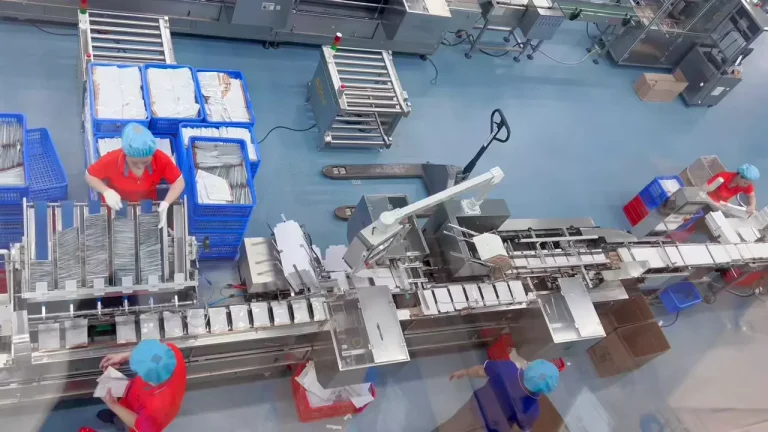
Tinted powder is demanding on the production floor: the line must be cleaned between shades, dust control must keep the area safe, and filling accuracy must hold the target dosage. When a facility handles multiple pigments, a few grams of black iron oxide in the wrong line ruins an entire batch, so cleaning protocols and traceability are part of the specification.
Our factory operates a 50,000 square meter GMPC facility in Guangzhou with more than 100 production lines and a daily output of 500,000 units, and our formulation library holds over 5,000 formulas. For a private label tinted dry shampoo, we provide in-house R&D formulas, customizable packaging options, and third-party test reports. We confirm shade references, color tolerance, and powder line cleaning procedures in writing before the purchase order is placed.
Testing, Documentation, and Market Compliance
Tinted dry shampoo is a leave-on product, and the pigment adds one more layer to the test plan. The finished powder should pass microbiological testing, heavy metals screening, and accelerated plus real-time stability testing covering moisture pickup and color shift. Because iron oxides are metal compounds, the heavy metals report is a standard requirement, and buyers should request it from an ISO 17025 accredited laboratory rather than an in-house summary.
Color consistency is checked on every batch against the approved shade reference, and the tolerance should be written into the quality agreement. For a private label tinted dry shampoo sold into the European Union, the product must be notified in CPNP with a Cosmetic Product Safety Report; for the United States, MoCRA requires facility registration and product listing. A claim such as “no white residue” also needs substantiation. Our quality team compiles the full package as part of the turnkey service, and we support NDA and compliance requirements for your destination market.
MOQ, Pricing, and Project Timeline
Minimum order quantities are usually the first question in any tinted program. Our standard MOQ is 5,000 pieces per SKU, with tiered pricing beginning above 20,000 pieces. Because a tinted line may launch with two or three shades, the MOQ applies per SKU, keeping the pilot order manageable while covering the shade-matching and color-check work a plain launch does not require. Free samples are available for evaluation, and we sign NDAs before sharing formulation details.
Packaging is part of the program: a tinted powder is often specified with an opaque container or sifter closure, and we offer customizable options from bottle shape to label finish. For repeat items, we keep stock programs and can ship within 48 hours, reducing your safety inventory.
One recent example: a European e-commerce brand wanted a tinted powder dry shampoo in two shades and one aerosol SKU. Our R&D team selected an iron oxide blend, matched the shades against the brand’s hair color chart, ran stability and microbiology panels, and delivered the first order with the CPNP file included. From brief to first shipment, the project took eleven weeks. For existing channels, we support mixed batch orders across SKUs, so one purchase order can cover several shades and sizes.
Evaluation Checklist Before You Sign
Use this checklist when comparing candidates for a private label tinted dry shampoo: request a sample formula with the full INCI list and pigment specification; ask for the iron oxide source and heavy metals data; review a sample Certificate of Analysis and a third-party lab report; confirm the filling lines match your format; verify shade matching and batch traceability; and clarify formula ownership after development. Confirm the MOQ, tiered pricing, free samples, and the timeline from formula freeze to first shipment in writing.
Treat these as red flags: a supplier that cannot share stability data, offers only in-house test results without laboratory details, refuses to sign an NDA before formulation discussions, or cannot name the pigment and raw material sources for its tints. A supplier that answers these questions with documents rather than promises is a supplier you can build a tinted program with.
Frequently Asked Questions
1. Why do tinted dry shampoo products cost more than plain powder formulas?
The price difference comes from the pigment system, the shade-matching work, and the color checks on every batch. Iron oxides cost more than plain starch fillers, and each shade requires a reference and a re-check before filling. The added cost is small per unit, but the discipline prevents shade drift between batches.
2. How many shades should a tinted dry shampoo launch with?
Most programs start with two or three shades, typically a universal brown, a deep black, and a blonde tone. A small range keeps the pilot order and color work manageable, and it can expand once retail data shows which shades sell. Our standard MOQ of 5,000 pieces per SKU applies to each shade.
3. What tests are required for a tinted dry shampoo?
At minimum, microbiological testing on the finished powder, heavy metals screening, and accelerated plus real-time stability testing covering moisture pickup and color shift. Tinted variants add a color consistency check on every batch, and aerosol formats add pressure, spray rate, and can integrity tests. Third-party reports from an ISO 17025 accredited laboratory are expected by most retail partners.
4. How long does it take to develop and produce a tinted dry shampoo?
With a locked brief and an existing base formula, sampling typically takes two to four weeks, followed by stability testing and the first production run, for a total of roughly eight to twelve weeks. Tinted variants add time for shade matching and color stability testing. Build the testing window into your launch plan.
5. Can a tinted dry shampoo be produced in both powder and aerosol formats?
Only if the facility has both powder filling lines and pressurized aerosol lines with propellant handling. Confirm which formats the factory can fill before committing to a portfolio, since the color checks differ between formats, and retrofitting filling capability is expensive and slow.
Contact us today to request free samples and a customized quotation for your next hair care product line.
For the full picture on this category, start with Private Label Dry Shampoo: A Sourcing Guide for Procurement and Brand Teams.
Adjacent briefs worth reading together: Dry Shampoo Formulation Supplier: A Sourcing Guide for Procurement Teams, Natural Dry Shampoo Formulation Manufacturer: A Procurement Guide to Sourcing and Verifica, China Dry Shampoo Market: A Procurement and Private Label Manufacturing Guide.
If you are comparing what a factory already produces, review our private label hair care product range.