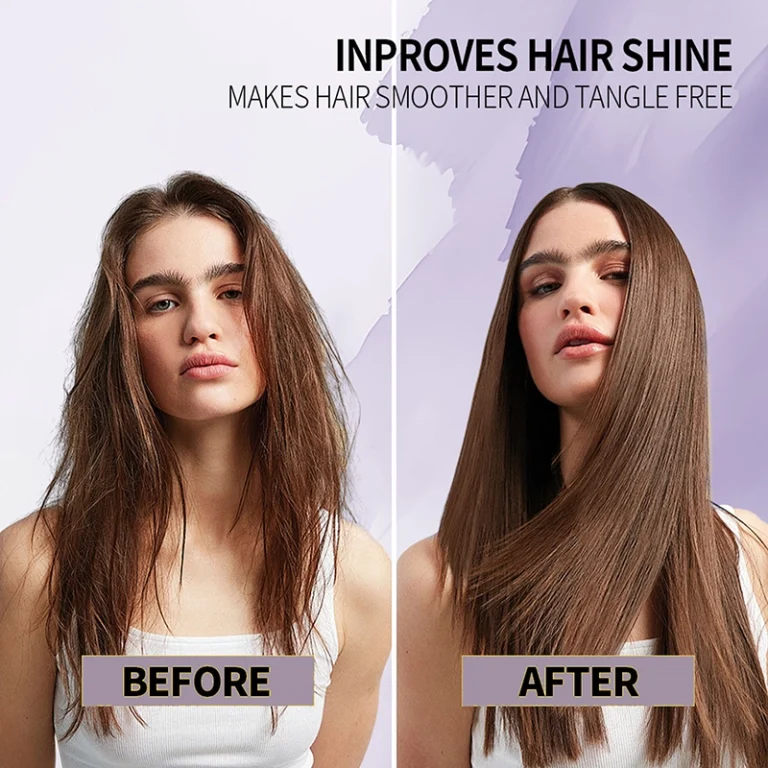
For procurement professionals evaluating suppliers in the personal care space, the hair mask category presents both opportunity and complexity. As consumer demand for deep-conditioning treatments continues to grow across mass, prestige, and indie brand channels, securing the right manufacturing partner becomes a strategic decision that affects product quality, speed to market, and ultimately, brand reputation. Understanding how hair mask contract manufacturing works—from formula development through packaging compliance—is essential before signing any production agreement. For brands new to hair mask contract manufacturing, the range of available base platforms, packaging formats, and quality tiers can be overwhelming without a structured evaluation framework.
When brands evaluate hair mask contract manufacturing partners, the first consideration should be formulation capability. Hair masks differ from standard conditioners in their chemistry, requiring higher concentrations of film-forming polymers, hydrolyzed proteins, and lipid-phase ingredients designed to penetrate the cuticle rather than simply coating it. A capable hair mask contract manufacturing partner must demonstrate expertise in emulsion stabilization at higher oil-phase ratios, cold-process compatibility for heat-sensitive actives, and preservative system optimization for high-water-activity formulas. These technical requirements make the choice of hair mask contract manufacturing partner a critical sourcing decision.
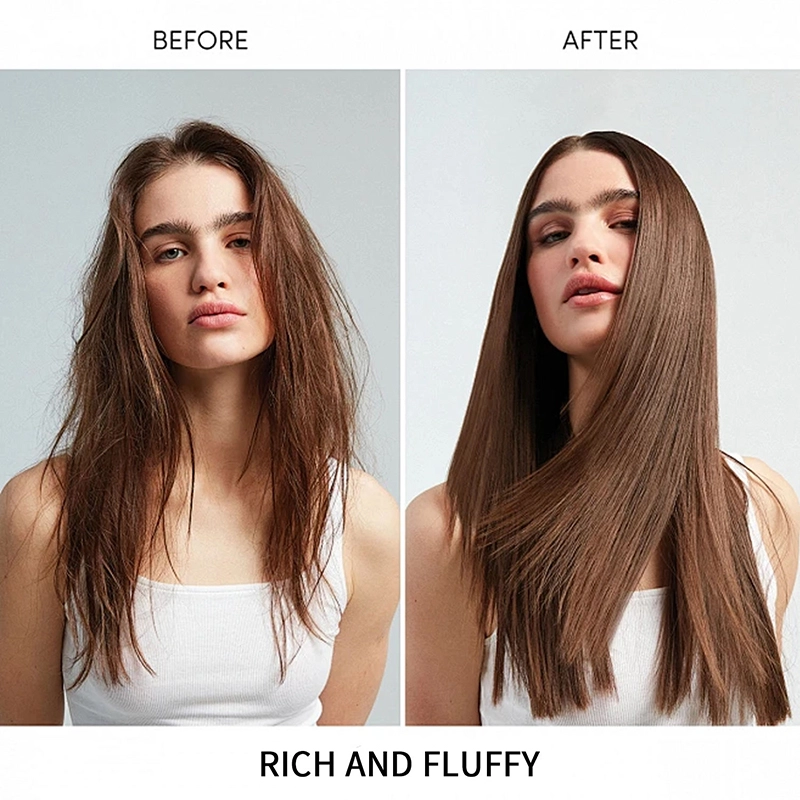
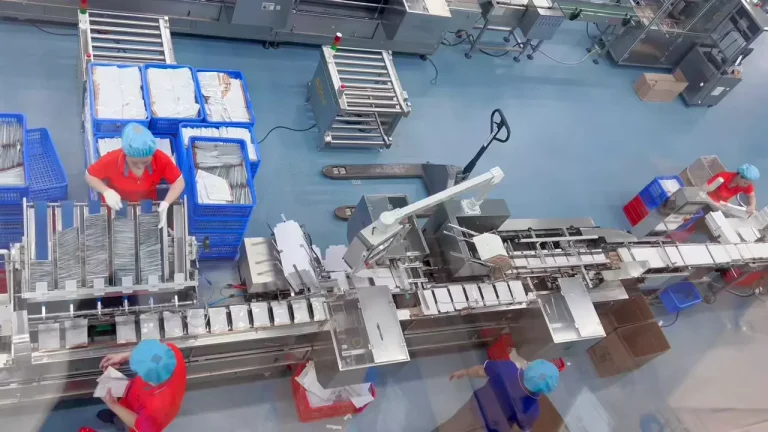
At our 50,000㎡ GMPC-certified facility in Guangzhou, we have specialized in hair mask contract manufacturing since 2009. Over 16 years, we have developed more than 5,000 active formulations including over 200 dedicated hair mask recipes spanning rinse-off, leave-in, and overnight treatment formats. Our R&D team maintains a library of 87 base mask platforms—each pre-validated for stability across pH 4.0–6.5—that can be customized with specific active ingredients such as ceramides, fermented extracts, or heat-activated proteins. This depth of experience means that when a brand approaches us for hair mask contract manufacturing, we can typically recommend three or four base platforms matched to their target positioning within the first consultation. For brands seeking hair mask contract manufacturing with shorter development timelines, our pre-stabilized platforms can reduce the formulation phase by up to 40%.
Terminology note: “Emulsion stabilization” refers to the technical process of keeping oil and water phases from separating in a finished product. This is especially critical in hair masks, which carry a higher oil load than everyday conditioners. A well-stabilized emulsion ensures consistent texture and efficacy from the first jar to the last. This is one reason experienced hair mask contract manufacturing partners invest heavily in rheology and stability testing infrastructure.
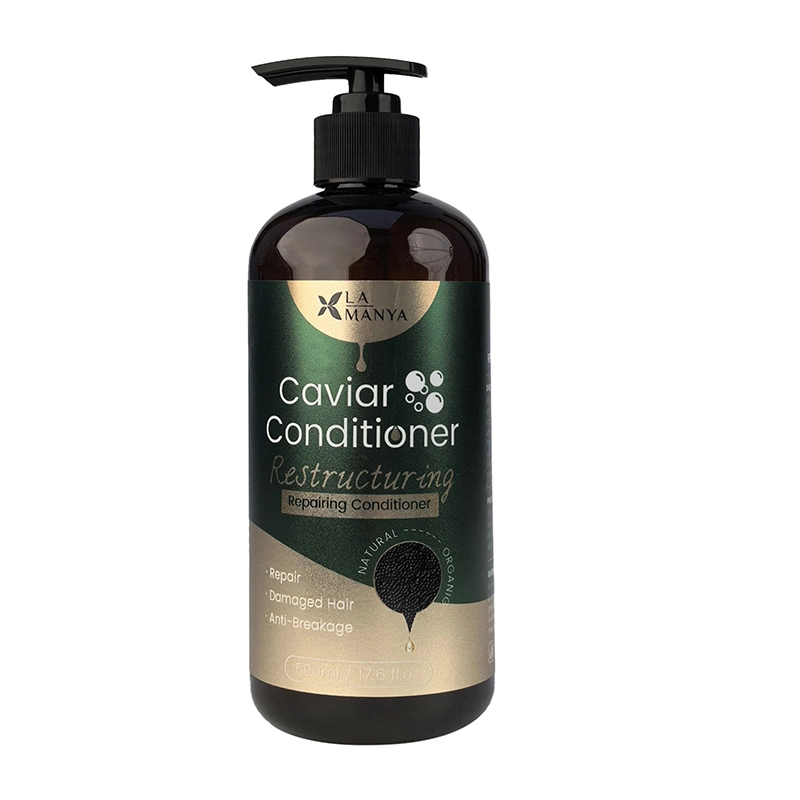
Minimum Order Quantities and Production Flexibility
For emerging brands evaluating hair mask contract manufacturing options, MOQ is often the first gate. We offer a starting MOQ of 5,000 pieces per SKU, which positions us competitively between small-batch artisan producers and the multinational giants that rarely accept orders under 50,000 units. For brands needing lower entry points, our tiered pricing at 5,000, 10,000, and 20,000+ pieces allows you to validate a product in market before scaling. This flexibility makes our hair mask contract manufacturing service accessible to both startup brands and established lines launching new SKUs.
Hair masks are commonly packaged in jars, tubes, or single-use sachets, each carrying different production considerations. Jar filling requires specific viscosity parameters—typically 100,000–250,000 cP—while tube filling accommodates lower-viscosity, more spreadable masks. Our production lines handle all three formats, and we can switch between them within the same shift. When procurement teams compare hair mask contract manufacturing partners, packaging format compatibility directly affects both speed to market and unit economics.
“We brought a jarred hair mask concept to this manufacturer in late 2024 and went from formula brief to first production run in 11 weeks, including accelerated stability testing. The viscosity tolerance on their fill line was within 2% of our target spec,” noted one procurement manager who selected our hair mask contract manufacturing service for their overnight mask launch.
Quality Standards and Third-Party Testing
Procurement teams evaluating hair mask contract manufacturing partners should verify three testing milestones: raw material identity verification upon intake, in-process viscosity and pH monitoring during production, and finished-product stability testing before release. We maintain a dedicated QC laboratory on-site that runs challenge testing, accelerated stability at 40°C/75% RH for 12 weeks, and freeze-thaw cycling for cold-chain shipments. These protocols are standard across our hair mask contract manufacturing operations and apply to every batch regardless of order size.
We provide third-party test reports for every production batch. For hair masks specifically, we commission rheology profiling to confirm texture consistency and preservative efficacy testing for microbial safety. These reports support your retailer compliance teams during the listing process. Our R&D team collaborates with brands to customize formulations—adjusting raw-material odor masking, optimizing deposition systems for conditioning agents, or reformulating around restricted-substance lists—all within the standard hair mask contract manufacturing development cycle of 6 to 10 weeks from brief to production-ready approval. A well-structured hair mask contract manufacturing partnership includes these quality gates as standard operating procedure, and our hair mask contract manufacturing team reviews each gate with the brand’s procurement team before proceeding.
In-house R&D capability is a distinguishing factor when selecting a hair mask contract manufacturing partner. We can develop entirely new formulas or customize existing base platforms depending on your brand’s timeline and budget. Our hair mask contract manufacturing process includes three formal review gates: formula approval, packaging compatibility sign-off, and batch record review before production.
Customizable Packaging Options
The packaging for a hair mask directly influences both shelf appeal and functional performance. A pump jar for a thick overnight mask must deliver consistent dosing without clogging; a tube format for a weekly deep-treatment mask needs a compatible sealing membrane. Our packaging procurement team works with verified suppliers across Asia, offering stock molds (fastest lead time, lowest cost) and custom mold development for proprietary shapes or dispensing systems.
We offer customizable packaging options including color matching for caps and bottles, hot-stamping or shrink-sleeve decoration, and inner-seal selection. PCR jar options and mono-material tube structures are available for sustainable positioning. All packaging materials are validated for formula compatibility before the production run. When procurement teams evaluate hair mask contract manufacturing quotes, packaging compatibility testing is a step that prevents costly reformulation later. Selecting an experienced hair mask contract manufacturing partner with established packaging supplier relationships reduces lead times by several weeks.
Regulatory Compliance and Documentation
Hair masks classified as cosmetic products fall under different regulatory frameworks depending on the destination market. For brands sourcing hair mask contract manufacturing for the U.S. market, compliance with 21 CFR 700–740 is mandatory. For EU market entry, Regulation (EC) No. 1223/2009 applies, including CPNP notification and the requirement for a Responsible Person within the EU. For China market entry, our local manufacturing base simplifies registration under the NMPA framework.
We provide formulation INCI declarations, Safety Data Sheets, Certificate of Analysis for each batch, and full manufacturing documentation. Our experience across multiple regulatory regimes means that brands choosing our hair mask contract manufacturing service can enter new markets with documentation that meets local requirements without reinventing the compliance process for each region.
Cost Structure in Contract Manufacturing
When comparing quotes from hair mask contract manufacturing partners, procurement teams should look beyond unit price. A typical cost breakdown includes the formula development fee, mold or tooling investment for custom packaging, and per-unit filling and packaging labor. Our quotes present all three line items separately so buyers can compare apples-to-apples. Free samples are available for procurement evaluation—we can produce 2 to 5 kg of any base platform formulation for your team to test before committing to a full hair mask contract manufacturing run. This sample-to-production workflow is a standard part of our hair mask contract manufacturing process.
Once the formulation is approved, production lead time is typically 20 to 30 working days from raw material procurement to finished, labeled product ready for shipping. This turnaround applies across all hair mask contract manufacturing orders, whether stock-formula private label runs or fully custom developments. For brands scaling from test runs to full production, our hair mask contract manufacturing platform supports consistent quality across repeat orders.
Mask Formulas We Manufacture on Contract
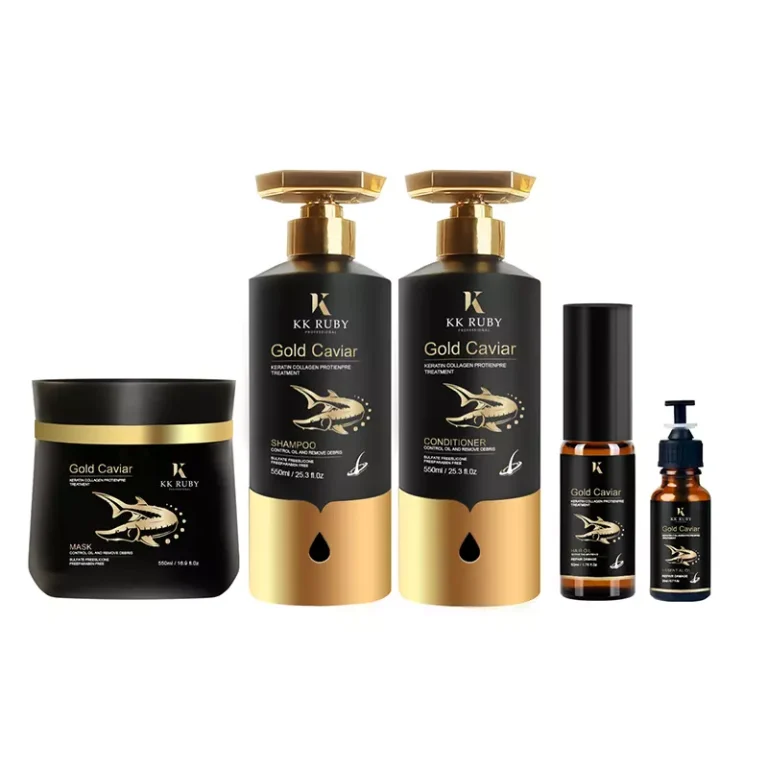
Masks carry the highest actives load of any rinse-off hair product, which makes emulsion stability the real constraint on what a factory can promise. The mask range we contract-produce includes keratin deep repair hair mask, botox smoothing repair hair mask, black rice strengthening hair mask, collagen revitalizing hair mask and argan gold repair hair mask. Every mask starts at 5,000 pcs per SKU in jar, tube or sachet, with custom formula, fragrance and packaging on factory wholesale terms for B2B buyers only.
Frequently Asked Questions
1. What is the typical MOQ for hair mask contract manufacturing?
Our standard minimum order is 5,000 pieces per SKU. For smaller test runs or regional market trials, tiered pricing at 5,000, 10,000, and 20,000+ pieces allows brands to scale investment in line with demand.
2. Can we use our own proprietary formula for hair mask manufacturing?
Yes. We accept customer-owned formulations as well as our own base platform formulations. For proprietary formulas, we conduct a scale-up feasibility review, typically requiring 2 to 3 weeks.
3. What packaging formats are available for private-label hair masks?
We support jar filling (30 to 500 g), tube filling (50 to 200 ml), and sachet filling (5 to 30 ml). Custom mold development for proprietary jar shapes or dispensing systems is also available with a 6- to 8-week lead time.
4. How long does a hair mask formulation take to develop?
Custom formulation development typically requires 6 to 10 weeks, including concept brief, lab bench iteration, accelerated stability testing, and scale-up validation. Base platform customizations can be completed in 4 to 6 weeks.
5. Do you provide regulatory support for different markets?
We provide full documentation including INCI declarations, Safety Data Sheets, Certificates of Analysis, and manufacturing documentation. For China market entry, our local production license simplifies NMPA registration.
Contact us today to request free samples and a customized quotation for your next hair care product line.
For the full picture on this category, start with Hair Conditioner Manufacturer Private Label: Formulas & MOQ.
Adjacent briefs worth reading together: Hair Mask Manufacturer Private Label: Bulk, Sachet & Tube, Custom Conditioner Formula Development: A Guide for B2B Procurement Decision Makers, Looking for a Reliable Hair Care Manufacturer? The Ultimate Guide to Shampoo & Conditi.
If you are comparing what a factory already produces, review our private label hair care product range.